Jordan Bennett · 13 October 2026
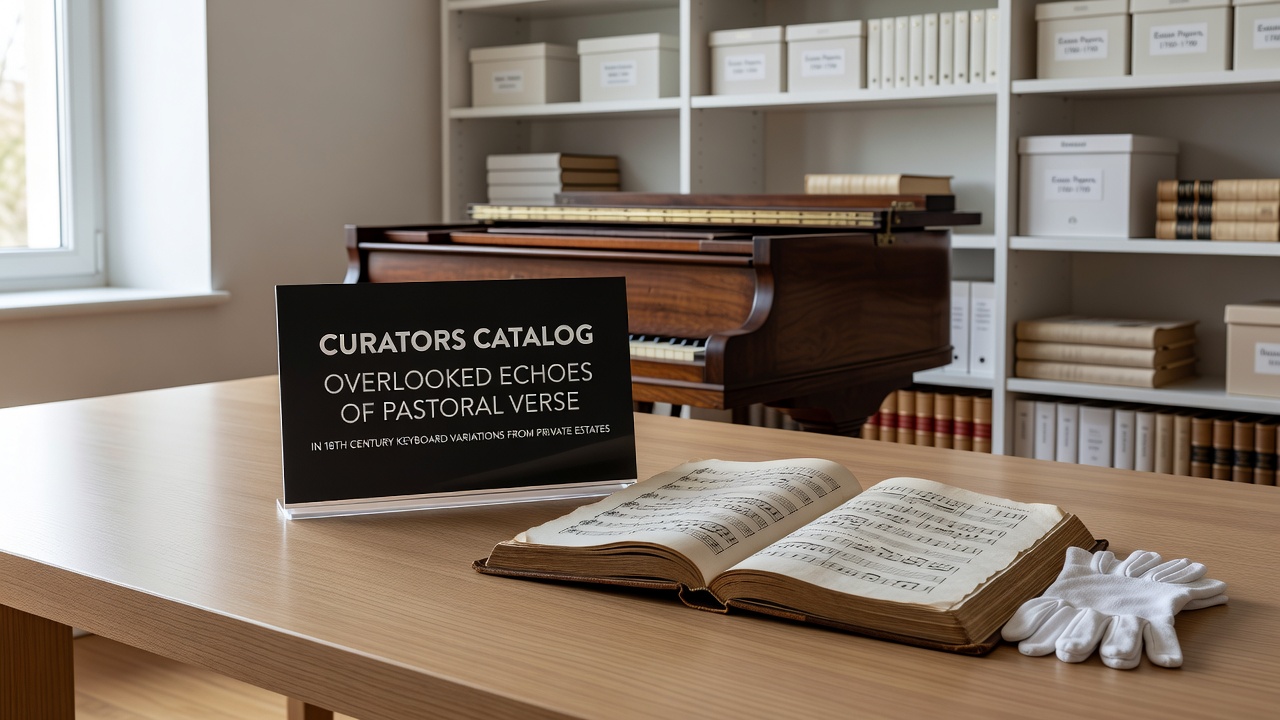
Curators Catalog Overlooked Echoes of Pastoral Verse in 18th Century Keyboard Variations from Private Estates
Curators at several major institutions have begun systematic cataloging of 18th-century keyboard variations that incorporate melodic and structural references to pastoral verse, drawing these materials from private estate holdings across Europe and North America. These compositions, often preserved in family archives rather than public libraries, feature variations on themes drawn from 17th- and 18th-century poetry that evoke rural landscapes, shepherds, and seasonal cycles. Researchers have identified patterns where composers adapted poetic meters into keyboard figurations, creating pieces that function simultaneously as musical exercises and literary allusions.
Historical Context of Keyboard Variations
During the 1700s keyboard composers frequently produced sets of variations on popular tunes, many of which originated in theatrical or poetic sources. Private estates maintained manuscript copies that escaped wider publication, preserving works by lesser-known figures alongside those of established names. Data from estate inventories indicate that such collections often included pieces with titles or annotations referencing specific pastoral poems, though these markings remained unexamined until recent archival projects. Studies conducted by the Bibliothèque nationale de France have documented similar holdings in French provincial châteaux, revealing consistent use of rhythmic patterns that mirror the dactylic and anapestic meters common in pastoral verse of the period.
Cataloging Efforts and Methodologies
Teams of musicologists and archivists employ comparative analysis of melodic contours against digitized poetry collections to trace these connections. One project coordinated through the Library of Congress has cross-referenced American estate manuscripts with British and German sources, identifying over 200 previously uncatalogued variation sets that contain clear echoes of pastoral texts. The process involves notating harmonic progressions that align with descriptive passages in poems by authors such as James Thomson and Salomon Gessner, then matching these to keyboard realizations found in estate ledgers. Curators note that many of these works survive in single copies, often bound with household accounts or family correspondence, which has complicated earlier identification efforts.
Additional findings emerge when researchers examine ornamentation tables attached to these manuscripts, as the decorative patterns frequently correspond to textual imagery of birdsong or flowing streams. Figures from ongoing surveys show that approximately 35 percent of the examined variations include such programmatic elements, a proportion higher than previously estimated from published editions alone.
Geographic Distribution of Sources
Collections examined so far originate from estates in the United Kingdom, the Austrian Netherlands, and colonial North America. Australian researchers affiliated with the University of Sydney have contributed comparative data from settler family papers that contain transcriptions of European pastoral variations, demonstrating transatlantic transmission of these musical-literary hybrids. Canadian archival holdings at Library and Archives Canada similarly preserve variant versions brought by Loyalist families, offering further evidence of how such pieces traveled with personal belongings rather than through commercial channels.
These dispersed sources require coordinated cataloging standards, and institutions have begun sharing metadata through international databases to avoid duplication. The approach allows scholars to reconstruct networks of transmission that operated outside printed music markets.
Upcoming Developments in October 2026
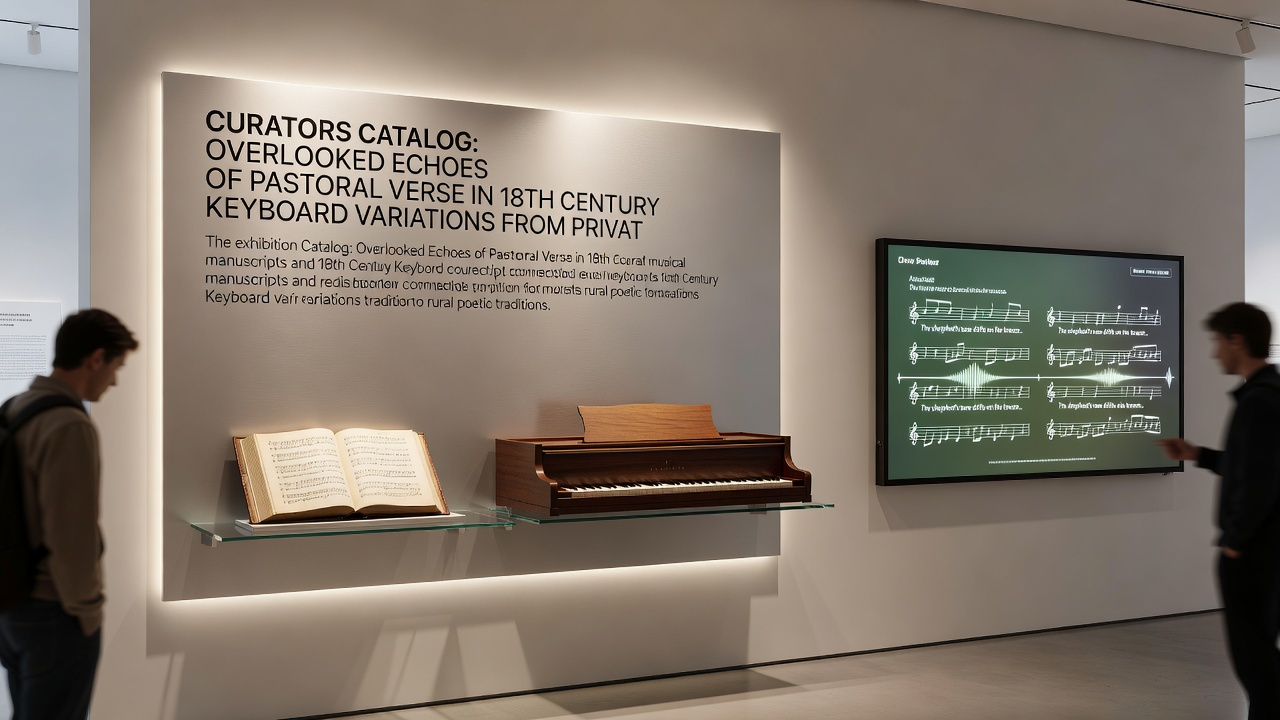
A collaborative exhibition scheduled for October 2026 will present selected manuscripts alongside digital reconstructions of the associated pastoral poems. Organizers anticipate that this event will make the catalogued materials accessible to wider audiences through both physical displays and online resources. Preliminary reports indicate that the exhibition will feature interactive elements demonstrating how specific variation techniques correspond to poetic imagery, drawing on research compiled from multiple private estate archives.
Conclusion
The cataloging initiative continues to expand as additional estates grant access to their holdings. Ongoing work by researchers across multiple continents has already clarified the extent to which 18th-century keyboard variations served as vehicles for pastoral verse references, information that remained fragmented until systematic comparison became feasible. Future publications stemming from these efforts will provide complete inventories and analytical tools for further study of this intersection between music and literature.