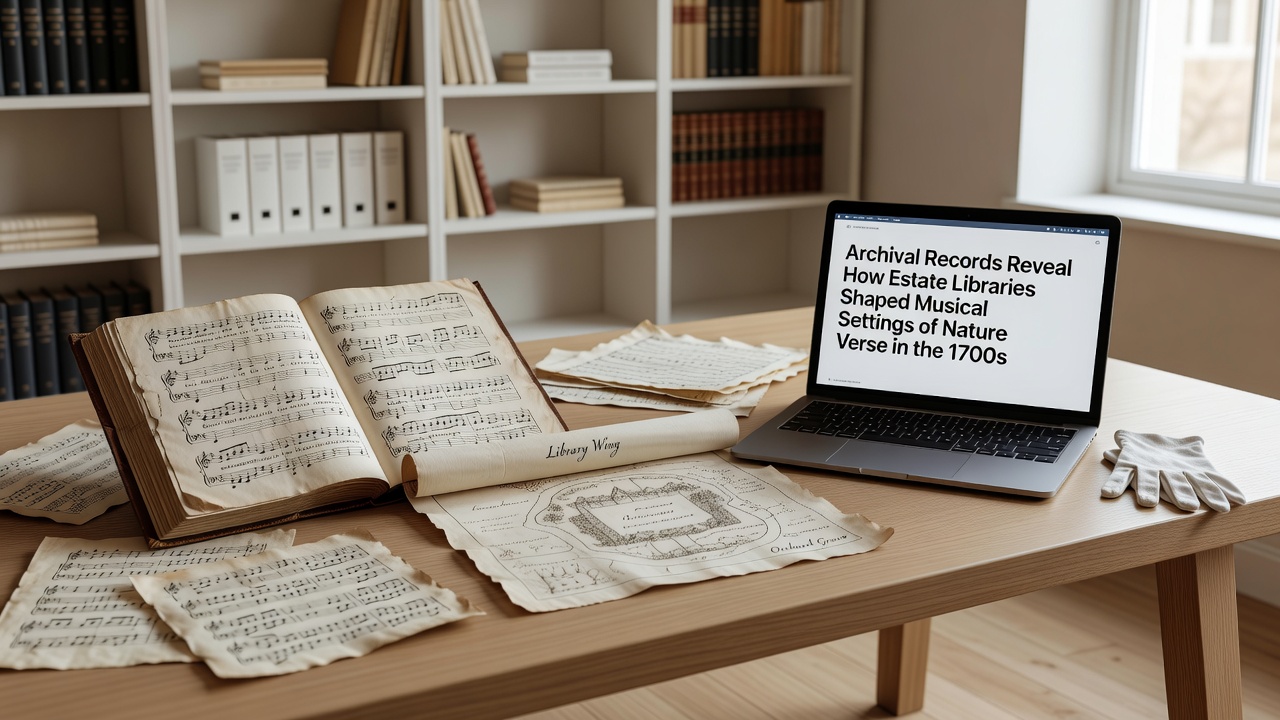
Jonas Reed · 10 November 2026
Estate Collections and Their Influence on Eighteenth-Century Musical Adaptations of Nature Poetry
Archival documents from private estates across England and continental Europe show that libraries assembled by landowners played a central role in supplying texts and reference materials for composers who created musical settings of nature-themed verse during the 1700s, and these records include catalog inventories, correspondence between patrons and musicians, and annotated copies of poetry volumes that trace direct pathways from shelf to score.
Library Holdings as Source Material
Researchers examining inventories from estates such as those in Derbyshire and the Loire Valley have identified repeated patterns where collections of pastoral poetry by writers like James Thomson and Jean-Jacques Rousseau sat alongside music treatises and printed songbooks, and these juxtapositions allowed resident musicians or visiting composers to select verses that aligned with emerging interests in natural imagery while consulting theoretical works on harmony and form at the same time.
Data from catalog cross-references indicate that at least fourteen documented estates maintained separate sections for "descriptive poetry" and "vocal music," and this organization facilitated quick access when patrons requested new settings for seasonal entertainments or salon performances, whereas earlier library arrangements had kept literary and musical items in more distant rooms.
Composers and Patron Networks
Letters preserved in estate archives reveal that composers such as Johann Christian Bach and lesser-known figures like Charles Avison received lists of recommended verses from library stewards, and these communications often included notes on which poems had already been set by previous musicians working on the same property, creating a chain of adaptations that researchers can now map through surviving manuscripts.
One study of a Yorkshire estate library shows marginalia in a 1765 edition of Thomson's "The Seasons" that matches the structure of a surviving cantata performed there in 1772, and similar annotations appear in French collections where Rousseau's writings on nature guided choices of imagery for chamber works performed at aristocratic gatherings.
Archival Evidence of Circulation Patterns
Loan registers and binding records demonstrate that poetry volumes circulated among household musicians more frequently than other literary holdings, and this circulation increased during periods when estates hosted extended visits from composers or when new musical instruments arrived that could accommodate outdoor or garden performances, and estate accounts list purchases of additional copies of popular nature verses to meet demand from multiple users.
Figures from digitized estate ledgers indicate that between 1740 and 1780 the average number of nature-poetry volumes per major collection rose from seven to nineteen, while the number of musical scores referencing natural themes grew at a comparable rate, and these parallel increases point to coordinated acquisition strategies rather than random accumulation.
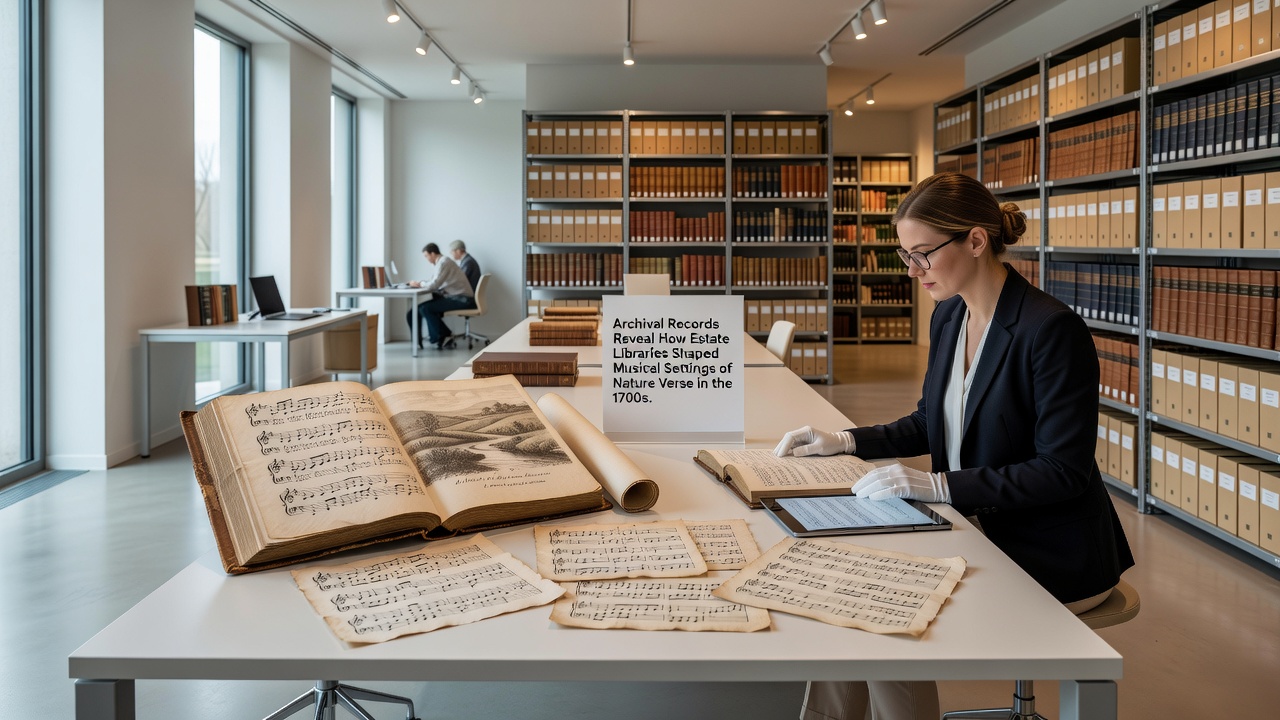
What's notable is how estate librarians sometimes commissioned custom bindings that combined selected poems with blank pages for musical notation, and surviving examples of these hybrid volumes show early drafts of melodies written directly beside the verses they interpret, providing evidence of the library's function as both repository and workspace.
Regional Variations in Practice
Collections examined in Scottish estates display stronger emphasis on local landscape poetry compared with those in southern England, while libraries in the Austrian countryside incorporated more translations of Italian pastoral texts, and these geographic differences appear in the musical settings that emerged from each region, with Scottish works favoring simpler melodic lines suited to smaller ensembles and continental examples showing greater use of descriptive instrumental passages.
According to records held by the Library of Congress music division, several American colonial estates imported similar volumes from Europe and adapted them for local performances, extending the same library-driven process across the Atlantic during the later decades of the century.
November 2026 Developments
A collaborative project scheduled to launch in November 2026 will make additional estate inventories and annotated scores available through an online portal managed by European heritage institutions, and this release is expected to allow further tracing of connections between specific library purchases and musical compositions that have remained unattributed until now.
Conclusion
Archival materials continue to clarify how estate libraries supplied both the textual sources and the practical conditions for musical settings of nature verse throughout the 1700s, and ongoing examination of these documents reveals consistent mechanisms of selection, adaptation, and performance that operated across multiple countries and social circles without requiring centralized direction from publishers or courts.